
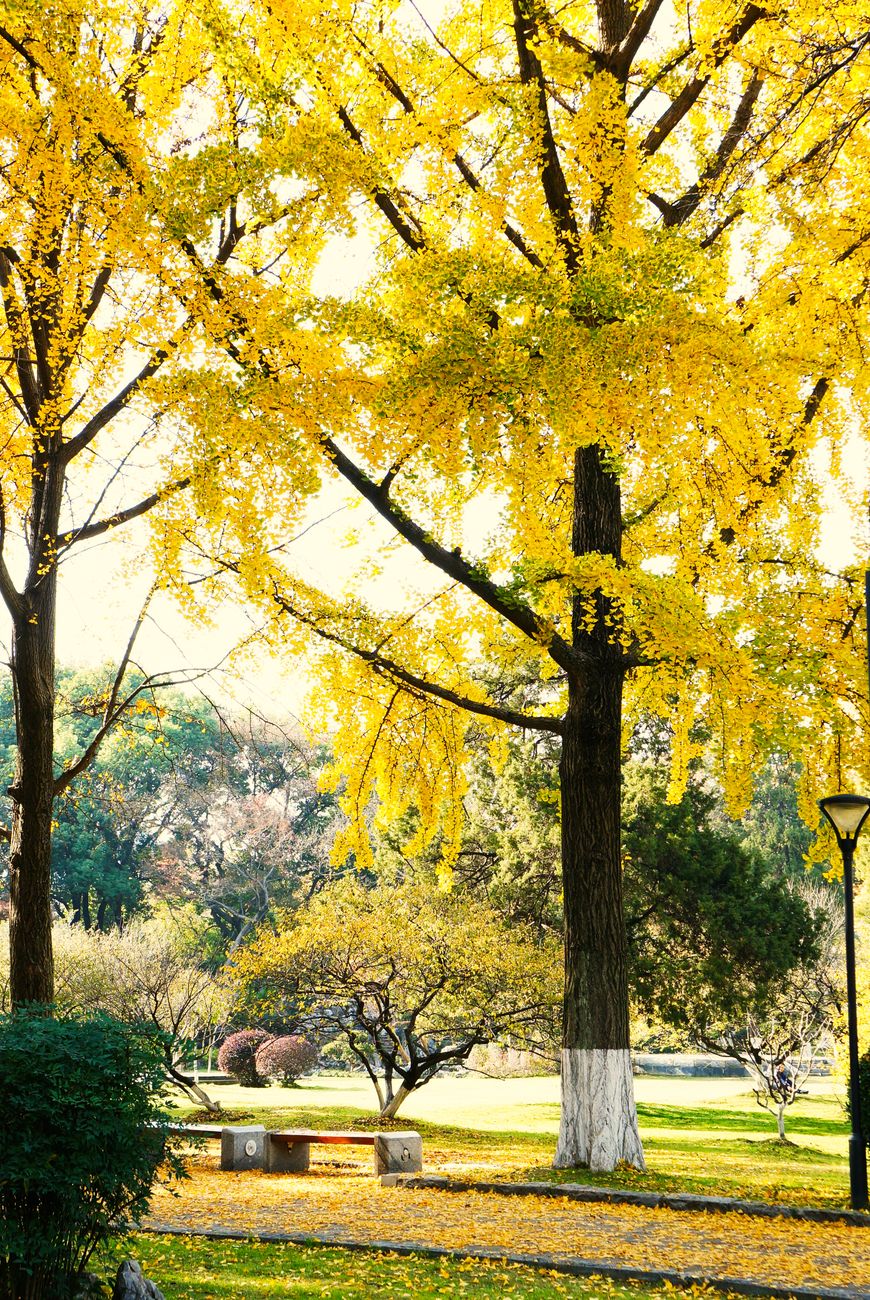
For about two weeks every autumn, Seoul turns yellow. The trees along the main roads, the ones outside every office and apartment block, all change at the same time, and when they drop you walk to the subway on a layer of gold leaves that the street sweepers have given up on.
The tree is the ginkgo, 은행나무 (eunhaeng-namu). Seoul has well over a hundred thousand of them.
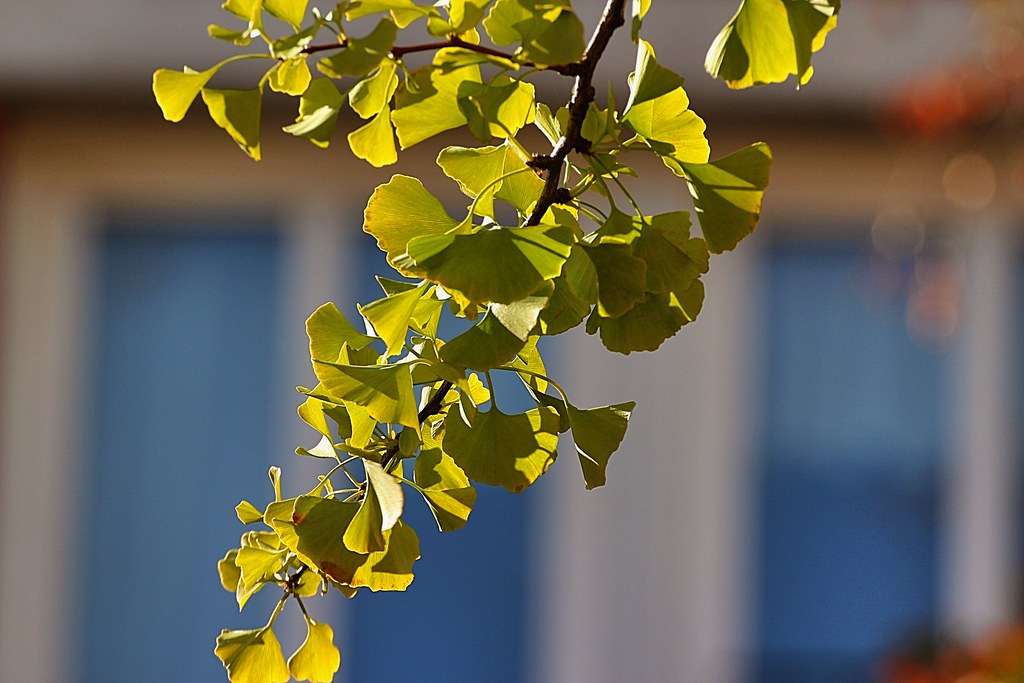
An old, stubborn tree
Ginkgo has been around for roughly 200 million years and has no living relatives at all; it is the only species left in its family. Fossils of leaves that look just like the ones on the pavement have been found in rock from before the dinosaurs.
It also happens to be very hard to kill. It puts up with exhaust, pests, bad soil and heavy pruning, and it grows straight and tall, which is exactly what you want from a street tree in a big city. So when Korean cities were being rebuilt and planted after the war, ginkgo went in by the tens of thousands, and it has been the default tree ever since.
The smell
Everyone in Seoul mentions the smell before the colour. In autumn the female trees drop small orange fruit, and the flesh, once it gets stepped on, smells like something rotting. City crews sweep it up every morning and by lunchtime it is back. I think the complaints are a bit overdone (it is a few weeks, and the leaves make up for it), but you will notice it.
Inside each fruit is a nut, 은행 (eunhaeng), which is a real ingredient. You get them roasted and salted as a bar snack, or a few of them floating in samgyetang, the ginseng chicken soup. 은행 is also the Korean word for a bank, from a different Chinese root, so the same word covers the thing on the pavement and the building next to it. Learners tend to enjoy that.
Where to go
In the city, Samcheong-dong and the road along the wall of Deoksugung Palace are the walks people take. Outside it, the famous one is the Asan Ginkgo Tree Road, about two kilometres along the Gokgyocheon stream, lined with 350 trees planted in 1966. Most of them are over fifty years old now and meet in the middle above the road. Further out, at Yongmunsa temple in Gyeonggi-do, there is a ginkgo said to be more than a thousand years old.
The colour peaks from late October into the first half of November, just before the first frost, and the whole thing is over in about two weeks.
Keeping a leaf
A ginkgo leaf is shaped like a small fan and it presses flat very well. A few days inside a heavy book and it keeps its shape and most of its colour. A strip of washi tape across the stem holds it in a journal.
If you are not going to be in Seoul in November, this ginkgo leaf masking tape from Today Living does a decent job of it. The leaves are printed on clear tape, so on the page they look pressed rather than stuck.
Go and stand under one if you can. It is short!
0 comments